


Materiality Assessment

Bound and Beyond operates with a clear purpose that guides our process for identifying and assessing the sustainability issues most relevant to our business and stakeholders.
By adhering to international best practices, we ensure that our ESG management is comprehensive, transparent, verifiable, and responsive to the evolving expectations of our stakeholders.
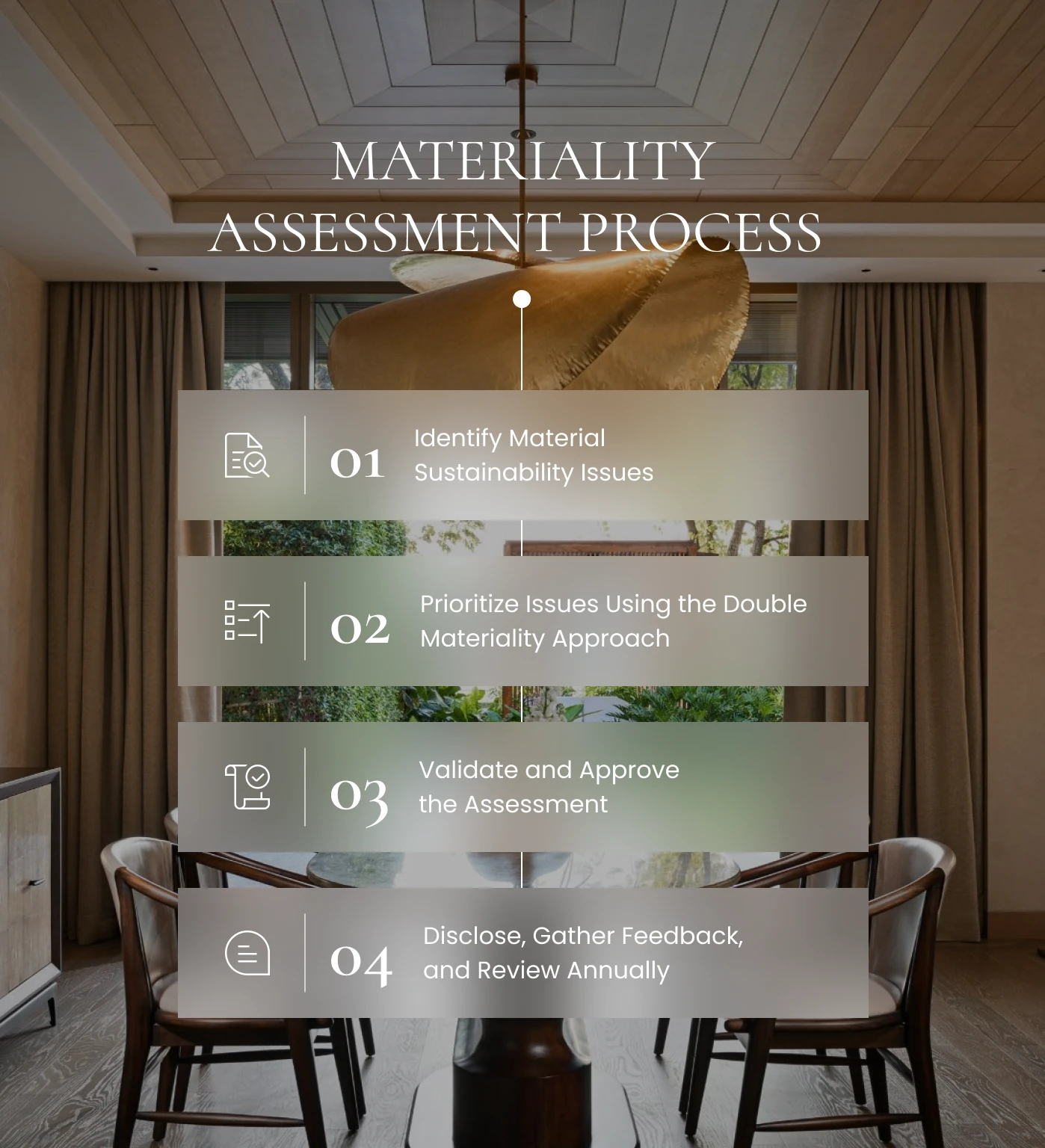
Materiality Assessment Process

Step 1: Identify Material Sustainability Issues
The Company reviews sustainability topics relevant to its business and entire value chain, gathering input from all stakeholder groups—including guests, employees, business partners, hotel operators, communities, investors, and regulators. This process helps determine which issues have a significant impact on the organization and its stakeholders.

Step 2: Prioritize Issues Using the Double Materiality Approach
BEYOND applies the “Double Materiality” principle to evaluate each topic based on:
- Impact Materiality: The actual or potential impact on stakeholders, society, and the environment.
- Financial Materiality: The relevance of the issue to business performance, operations, and enterprise risk.
This evaluation enables the Company to identify the issues that should be prioritised in driving sustainable development.

Step 3: Validate and Approve the Assessment
The analysis and prioritization results are reviewed by the Sustainability Committee and the Risk Management Committee, and subsequently presented to the Board of Directors for endorsement. This ensures that material topics are aligned with corporate strategy, risk trends, and BEYOND’s long-term sustainability objectives.

Step 4: Disclose, Gather Feedback, and Review Annually
Material sustainability topics are disclosed through the Annual Report, ESG reports, and other public communication channels to ensure transparency. Each year, the Company reviews and updates the material topics in response to changes in the business environment, risk landscape, stakeholder expectations, and international standards such as the SDGs, FTSE Russell ESG Ratings, and GRI Standards.
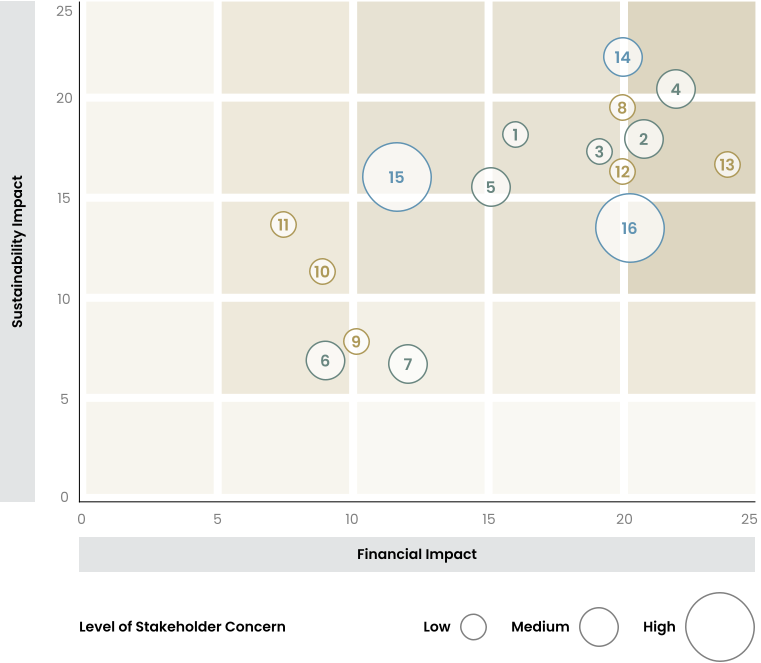
Results of the Sustainability Issues Assessment in Year 2025
Environmental
- 1 Climate Change and Greenhouse Gas Emissions
- 2 Energy Management and Efficiency
- 3 Waste Management
- 4 Water Management and Security
- 5 Climate-Related Risks
- 6 Biodiversity and Ecosystems
- 7 Pollution Management
Social
- 8 Human Rights and Labor Practices
- 9 Human Capital and Workforce
- 10 Communities and Society
- 11 Occupational Health, Safety, and Well-being
- 12 Customer and Product Responsibility Management
- 13 Data Privacy and Protection
Governance and Economic
- 14 Corporate Governance and Ethics
- 15 Risk and Crisis Management
- 16 Sustainable Supply Chain